

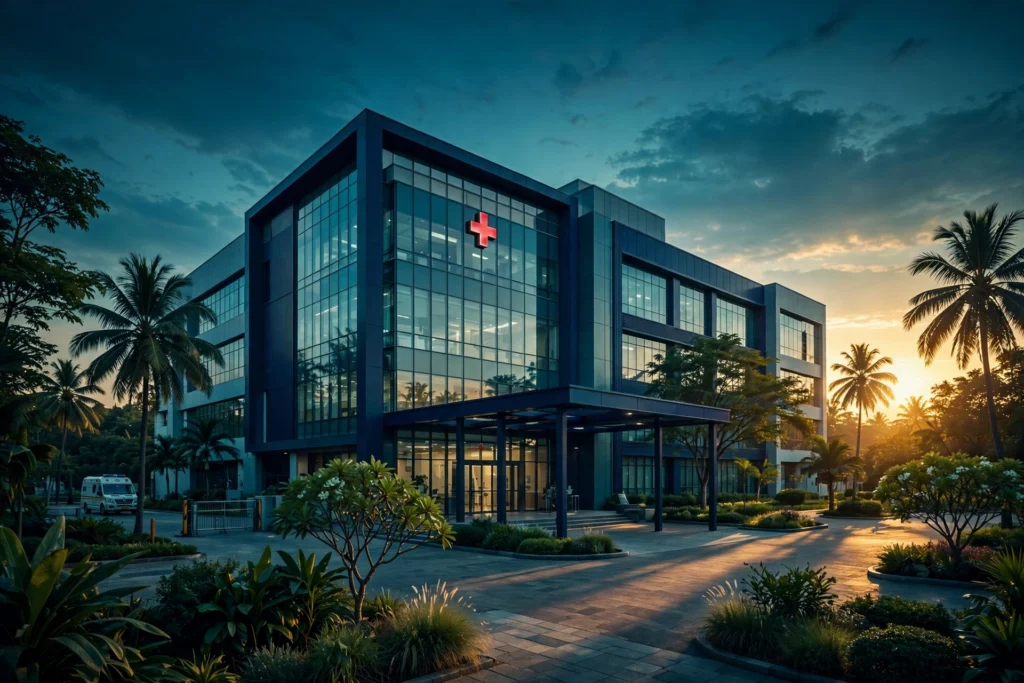
The khan sir hospital story begins not in a boardroom, but in a classroom. Long before white coats and diagnostic machines entered the picture, Faizal Khan — the teacher millions of students across India know simply as “Khan Sir” — was already famous for doing the impossible: making quality education affordable for students who could never dream of paying premium coaching fees. His journey from a beloved educator to the founder of one of India’s cheapest hospitals is a story of how one person’s promise to his mother grew into a healthcare movement that has captured the nation’s attention.
When news broke that a hospital in Patna was offering blood tests for just ₹7 and ECGs for ₹25, most people assumed it was a rumour. Diagnostic tests at prices lower than a cup of roadside tea sounded too good to be true. But according to multiple media reports, it was real — the soft launch of Khan Sir’s low-cost hospital initiative, an ambitious attempt to prove that healthcare in India does not have to bankrupt the people it is meant to heal.
Who Is Khan Sir?
To understand the hospital, you first need to understand the man behind it. Faizal Khan, popularly known as Khan Sir, rose to national fame as an educator through his online teaching and institutes such as Khan GS Research Centre and Khan Global Studies. His energetic teaching style, desi humour, and ability to explain complex topics in simple language made him a household name among competitive exam aspirants, especially students from economically weaker backgrounds who found in him a teacher who genuinely cared about their success.
What set Khan Sir apart was never just his teaching — it was his pricing philosophy. At a time when coaching institutes charged tens of thousands of rupees, he built his reputation on making education radically affordable. Millions of students who could not afford elite coaching found a mentor in him. That same philosophy — that essential services should be within everyone’s reach — would later become the foundation of his hospital project.
A Mother’s Question That Started It All
According to media reports, the idea for the hospital was born from a deeply personal conversation. Khan Sir has often spoken about the rising cost of healthcare in his classes and interviews, pointing out how essential medicines and treatments were becoming unaffordable for the average person. But the turning point, as reported, was his mother’s simple yet piercing observation: while he had made education affordable for millions, poor families were still suffering — and sometimes losing everything — because of medical bills.
Witnessing people sell land or belongings to pay hospital bills deeply moved the educator. His mother believed, as Khan Sir has been quoted saying in media coverage, that no poor person should be denied treatment simply because they lacked money. That conviction became the mission statement of the entire project. The hospital was not conceived as a business venture, but as the fulfilment of a mother’s lifelong wish — a place where the bill would never become a second trauma for the family.
From Classrooms to Clinics: The Hospital Takes Shape
Transforming that vision into a functioning hospital was no small task. According to reports, the facility came up in Patna, the capital of Bihar — a state where the need for affordable healthcare is among the most urgent in the country. The reported address places it on Ashok Rajpath, near Patna College, opposite Pillar No. 54 of the Double Decker Bridge, Patna, Bihar 800004 — a central, accessible location for patients travelling from across the region.
Media reports describe a modern facility equipped with diagnostic services, a dialysis unit with advanced machinery, and an operation theatre designed with unusual attention to hygiene. One widely reported detail captures the thoughtfulness behind the project: Khan Sir reportedly rejected traditional glossy tiles for the operation theatre after observing that the tiny joints between tiles could harbour bacteria, viruses, and fungi, opting instead for medical-grade anti-infection mats. Whether or not every design choice lives up to the headlines, the anecdote reflects the project’s stated philosophy — rethinking healthcare delivery from the ground up, with the patient’s safety and pocket both in mind.
The ₹7 Blood Test: Breaking Down the Pricing Model
The prices are what made the story go viral. Here are the rates that have been publicly reported:
- Blood test: ₹7
- ECG: ₹25
- X-ray: ₹35
- Kidney test: ₹17
- Dialysis: significantly reduced from standard rates, at minimal cost
To put this in perspective, widely reported 2024–2025 market estimates suggest that a standard blood test in a private Indian facility typically ranges from ₹150 to ₹500, while an ECG usually costs between ₹300 and ₹800. Khan Sir’s facility, by contrast, offers these services at a fraction of those prices — in some cases, even below government-subsidised rates.
During the hospital’s soft launch, Khan Sir was quoted in media reports as saying, “Our aim is not profit; it is service,” and that treatment at his facility would be cheaper than in government hospitals. The exact economics of how such pricing is sustained have not been publicly detailed in full, and it is worth noting that the initiative is described as being funded through his successful educational ventures. For the most current pricing, patients should contact the hospital directly to confirm, as rates and services may evolve over time.
What Facilities Have Been Reported
Based on media coverage, the reported facilities at the hospital include:
- Diagnostic services — blood tests, ECG, X-ray, kidney function tests, blood glucose tests and general pathology at subsidised rates
- Dialysis unit — a fully functional unit with advanced machinery, offered at minimal cost compared to standard per-session charges
- Operation theatre — designed with hygiene-focused materials, with plans reported for basic surgical procedures
- General consultations — OPD-style consultations with qualified doctors and technicians overseeing testing and reporting
- Future expansion — reports have mentioned possible additions such as a blood bank, cancer treatment facilities, subsidised medicines and pregnancy care, though these should be treated as reported plans rather than confirmed current services
It is important to approach such lists with the right expectations: this is an independent informational blog summarising publicly reported information, not an official hospital publication. Services, timings, and availability can change, so always verify directly with the hospital before planning a visit.
Why the Khan Sir Hospital Story Matters for Bihar
Bihar’s healthcare challenge is well documented. In a state where large rural populations often face a brutal choice between catastrophic medical debt and forgoing treatment altogether, a facility offering diagnostics at near-token prices is more than a curiosity — it is a potential lifeline. Early-stage diagnosis is the single most cost-effective intervention in medicine; a ₹7 blood test that catches diabetes or anaemia early can prevent complications that would otherwise cost a family its savings.
Beyond the immediate impact on patients, the khan sir hospital story matters because it challenges a powerful assumption: that quality healthcare must be expensive healthcare. Whether or not the model can scale to multiple cities, it has already forced a national conversation about pricing, transparency, and who the healthcare system is really built for. For students who once learned physics and current affairs from Khan Sir’s videos, the lesson has now moved from the classroom to real life — that systems can be redesigned when the motive is service rather than profit.
Frequently Asked Questions
Where is Khan Sir Hospital located?
The reported address is Ashok Rajpath, near Patna College, opposite Pillar No. 54 (Double Decker Bridge), Patna, Bihar 800004. Contact the hospital directly to confirm the exact location and visiting hours before travelling.
What are the reported test prices at Khan Sir Hospital?
According to media reports: blood test ₹7, ECG ₹25, X-ray ₹35, and kidney test ₹17, with dialysis offered at minimal cost. Prices may change, so confirm directly with the hospital.
Is the hospital open to everyone?
Reports describe it as a facility serving the general public, with a special focus on low-income families, daily-wage workers, and senior citizens. For eligibility or registration details, contact the hospital directly.
Who founded Khan Sir Hospital?
The initiative has been publicly associated with Faizal Khan, the educator popularly known as Khan Sir, and was reportedly inspired by his mother’s vision of affordable healthcare for all.
How can the hospital offer such low prices?
As quoted in media reports, the stated philosophy is “service, not profit,” with the project reportedly funded through Khan Sir’s educational ventures. The full financial model has not been publicly detailed.
Is this website the official website of Khan Sir Hospital?
No. khansirhospital.com/ is an independent informational blog and is not affiliated with or endorsed by Khan Sir Hospital.
Conclusion
The khan sir hospital story is ultimately a story about what happens when empathy meets execution. A teacher who democratised education asked why healthcare could not be democratised too — and then set out to prove it could. Whether you view it as a bold experiment or the beginning of a larger movement, one thing is clear: in a country where medical bills routinely push families into poverty, the idea that a blood test can cost ₹7 is not just a headline. It is a challenge to the entire system to do better. If you are considering a visit, go informed — verify the latest services and prices directly, carry your documents, and remember that affordable care, when delivered responsibly, can be genuinely life-changing.
Disclaimer: khansirhospital.com/ is an independent informational blog and is not affiliated with, endorsed by, or the official website of Khan Sir Hospital. This article is for general information only and is not a substitute for professional medical advice. Please consult a qualified doctor for health concerns.